The Technically Sweet Problem, Take Two
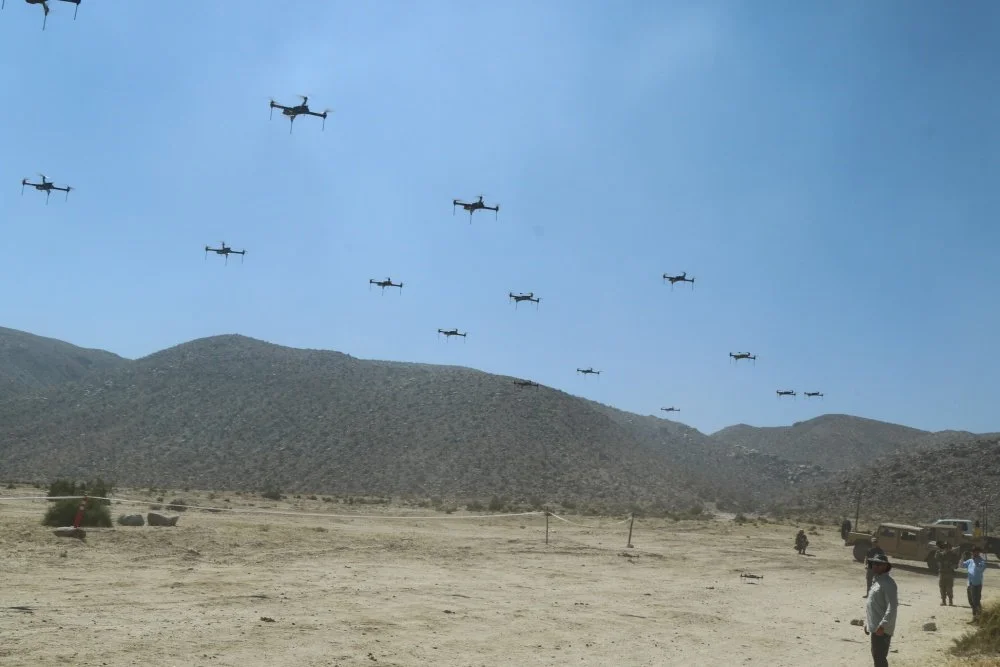
Military drone swarm
The observation begins with drones: drones recreating the Twin Towers in the sky over New York, drones causing devastation across the Middle East, and a rising fear that AI could bring about the end of humanity within the next ten years. Taken together, these threads point to something larger than any single headline — a pattern that has repeated at every major inflection point in technology since the Industrial Revolution. Each leap has reshaped not just how people work, but how they find value in their lives, and in some cases, how they die.
The development of the nuclear bomb at Oak Ridge and elsewhere stands as the sharpest prior example — part of the Manhattan Project, formally the Manhattan Engineer District, the U.S. Army Corps of Engineers program that extended well beyond the bomb's design itself. It encompassed the industrial-scale enrichment of uranium at Oak Ridge, plutonium production at Hanford, and weapon design and assembly at Los Alamos — a sprawling national effort to move a weapon from theory to deployable reality.
Oppenheimer's notion of a "technically sweet" problem is central here. Testifying at his 1954 security clearance hearing, he was speaking specifically about the decision to pursue the hydrogen bomb after the Soviet Union's first atomic test — not the original bomb itself — but he drew the line straight back to that earlier case as the model. He described the 1949 hydrogen bomb program as a "tortured thing" that didn't make much technical sense, one that could reasonably be argued against. By 1951, once the practicalities became clear, the program had become, in his words, "technically so sweet that you could not argue about it." His broader point: "When you see something that is technically sweet, you go ahead and do it and you argue about what to do about it only after you have had your technical success. That is the way it was with the atomic bomb." The pull he's describing isn't abstract fear of a technology — it's the seduction that hits once you can see exactly how to build the thing.
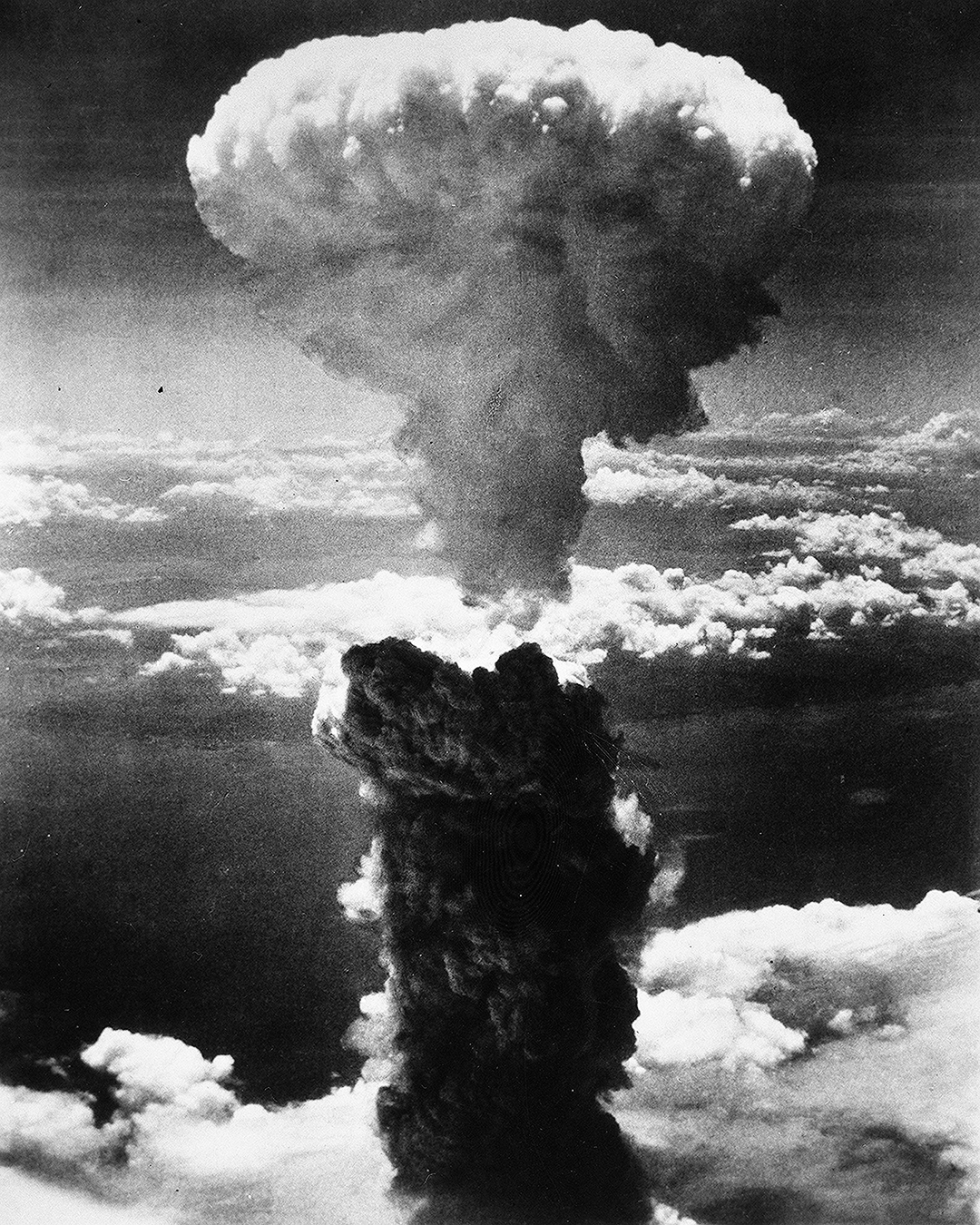
Nuclear explosion mushroom cloud over Nagasaki, Japan
Humanity has stood at the edge of its own annihilation before. That edge is arguably still in front of us, and it may be part of the logic behind the current U.S. posture toward Iran — one interpretation being that the same technically sweet pull that drove the nuclear age is operating again, this time around AI and drone warfare.
The premise is that this is a cusp moment: AI is ushering in a new era in the way the nuclear age once did, and it likely needs to be approached with the same seriousness — the same reckoning with consequence — that eventually shaped how the world handled nuclear weapons. AI and drones are already changing the nature of war. Ukraine's resistance to Putin's invasion is one clear illustration — its endurance to this point has gone beyond what most predictions expected, and much of that owes to exactly the kind of technology this piece is concerned with.
The open question sitting underneath all of it: did we just get lucky? Did the world actually manage the nuclear age well, through deliberate norms and deterrence — or did it simply avoid catastrophe for eighty years through luck that may not hold? And if it was luck, the choice in front of us now is the one that matters: do we roll the dice again, or do we act to manage the problem before it becomes one?
Reading list
Day One, Before Hiroshima and After — Peter Wyden
The Making of the Atomic Bomb — Richard Rhodes
Brighter Than a Thousand Suns — Robert Jungk
Genius Makers — Cade Metz
The Coming Wave — Mustafa Suleyman
The Age of AI — Kissinger, Schmidt & Huttenlocher