What's Left of the Water
There's a spring in the Arizona desert that has been giving people water for at least sixteen thousand years. Not sixteen hundred. Sixteen thousand. Archaeologists have found evidence of people camped at Quitobaquito Springs going back that far — long before Rome, long before writing, long before almost anything we'd recognize as history. The Hia-Ced O'odham and Tohono O'odham have called it A'al Vaipia and treated it as sacred ground for as long as anyone can trace. A Jesuit missionary wrote about visiting it in 1698 and gave it a name that didn't stick. A family — the Oroscos — lived there, the last private residents, until 1957, when the park service finally bought the land and folded it into Organ Pipe Cactus National Monument.
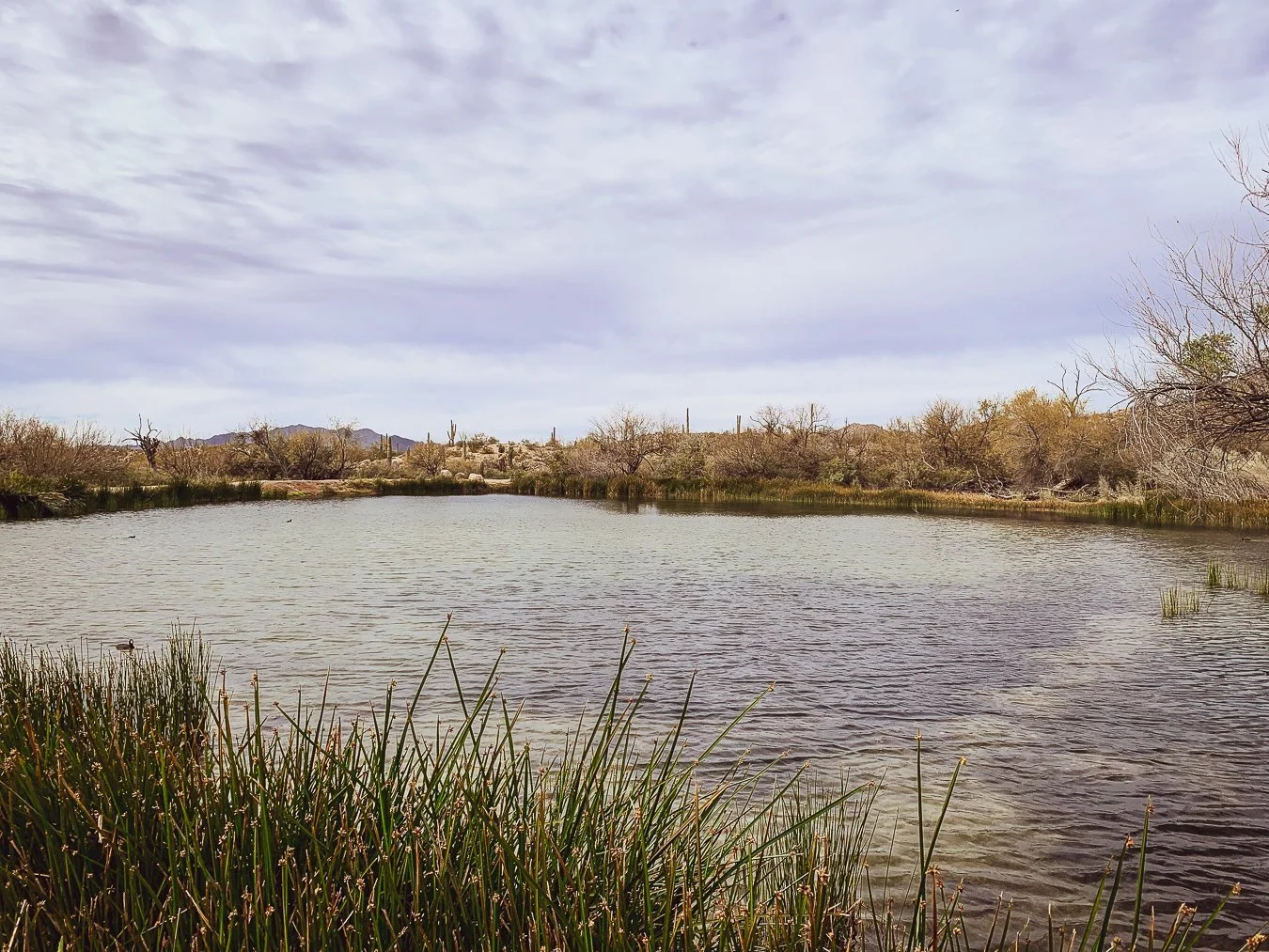
Quitobaquito Springs, 2019 — before the first wall
None of that is what I want to write about today, exactly. What I want to write about is what's happening to it right now, this week, while most of the country isn't looking.
Quitobaquito is one of the only reliable above-ground water sources in that whole stretch of desert. It holds a fish that lives nowhere else on Earth — the Quitobaquito pupfish, already endangered. It holds a mud turtle being considered for endangered status, a spring snail smaller than a grain of pepper, a desert caper plant with its own dedicated butterfly. Take the water away and none of that comes back. It isn't the kind of thing you rebuild.
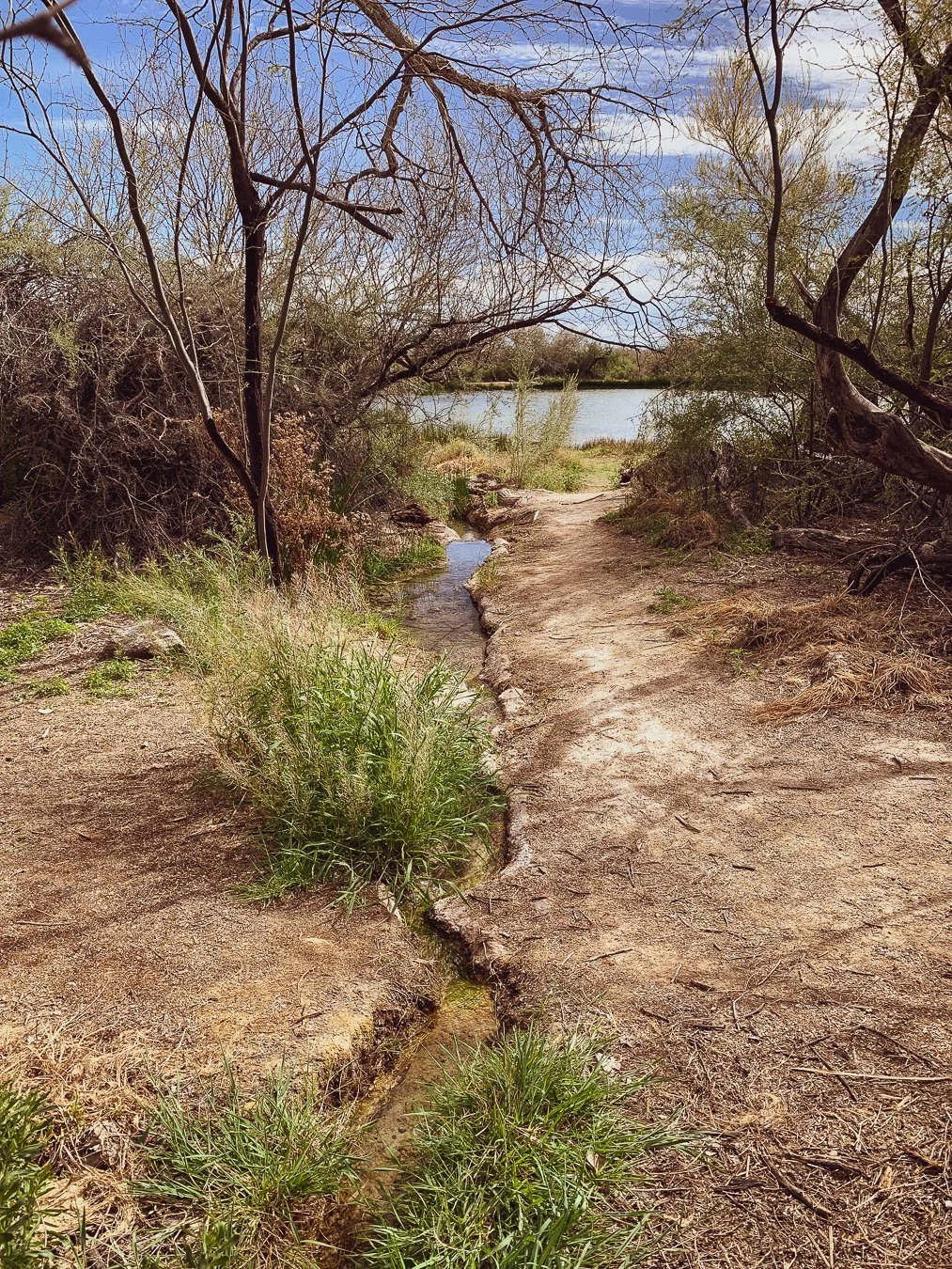
The spring's outflow, 2019 — the water the pupfish, the turtle, and the springsnail all depend on.
In 2020, during the first round of border wall construction, crews put up a 30-foot bollard fence south of the springs. Water levels dropped. Scientists said so publicly and asked for construction to stop. It didn't stop, though that round eventually ended.
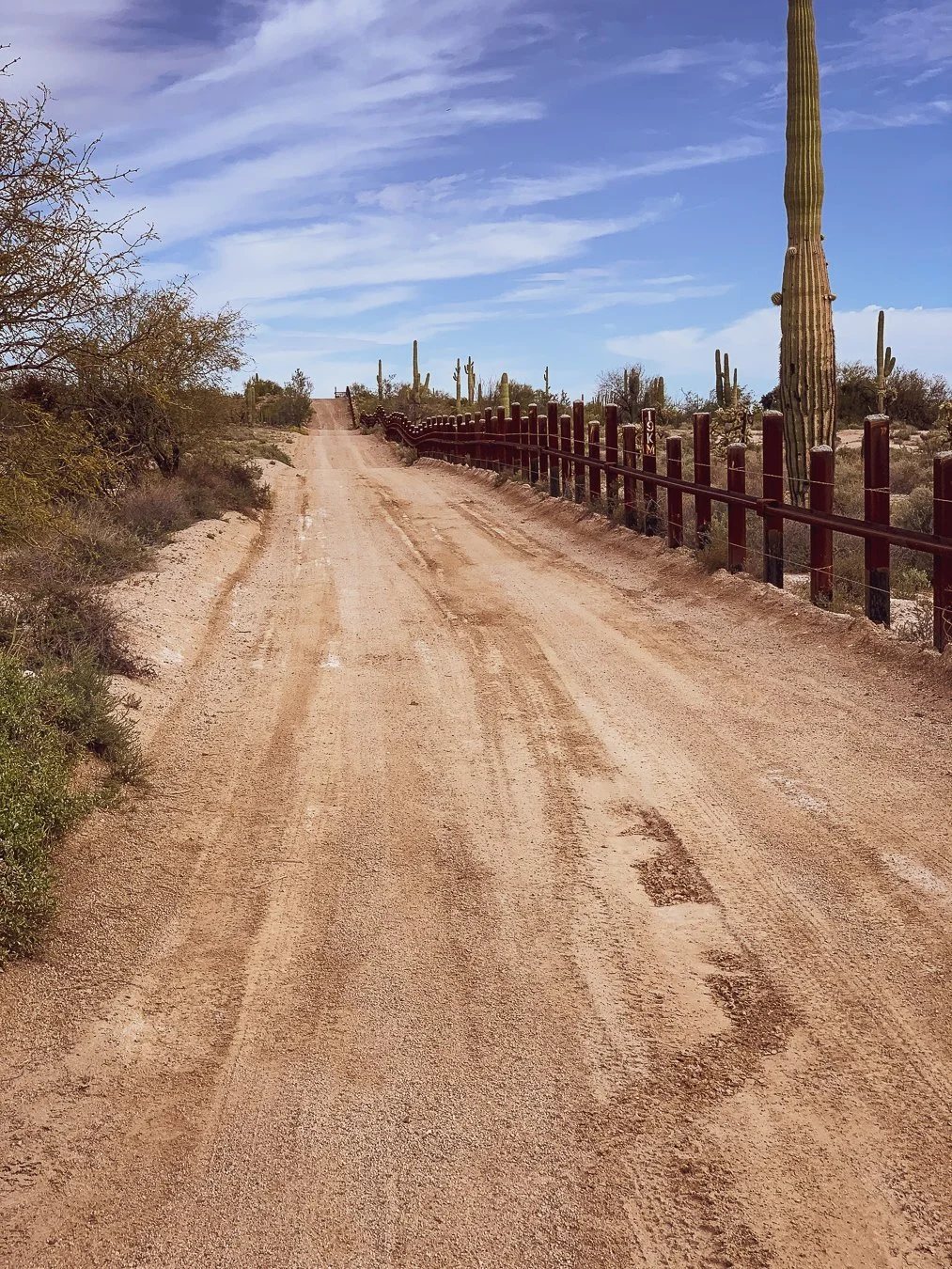
What stood here before 2020 — a low vehicle barrier built to stop trucks while still letting water and wildlife pass through.
Fixing what that broke took more than a press release. A small nonprofit up the road in Ajo — the International Sonoran Desert Alliance — spent a year raising money for the repair, reaching $100,000 by June 2021. The job itself was replacing the pond's liner, something the Park Service hadn't done in fifty years, and it ran somewhere between $250,000 and $400,000 once federal funds were added in — a rounding error next to what the wall itself cost, spent just to undo what building the wall broke. When the actual work started in the spring of 2022 — right around when I was there myself — crews had to empty the pond completely. Every wild pupfish and every wild mud turtle on the planet, because there is no other population of either anywhere, got scooped by hand into holding tanks until the new liner was down and the water was let back in.
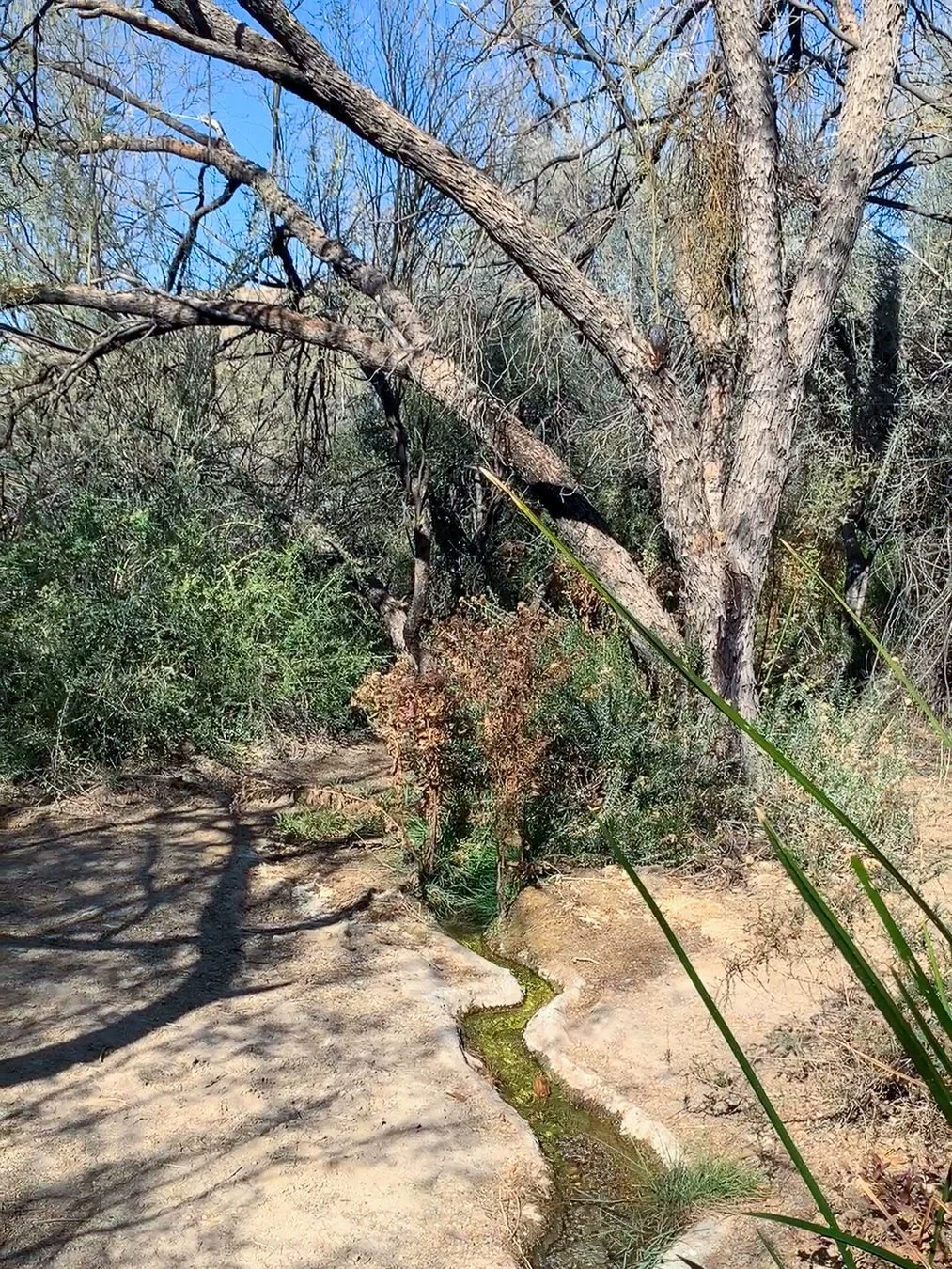
The same outflow channel, 2022, after the pond was relined and refilled.
Even the people who pulled that off don't call it a recovery. Lorraine Eiler, a Hia C-ed O'odham elder who helped lead the restoration, said afterward: “Whatever was here is gone... We'll never get to the point of what it used to look like.”
As of this month, bulldozers are back — on both sides of the springs this time, clearing ground for a second wall, with more construction planned on Tohono O'odham land just to the east. Crews have been out doing soil sampling and boring into the earth, which is the quiet, procedural-sounding phase that comes right before the loud one. Customs and Border Protection hasn't said when the loud one starts.
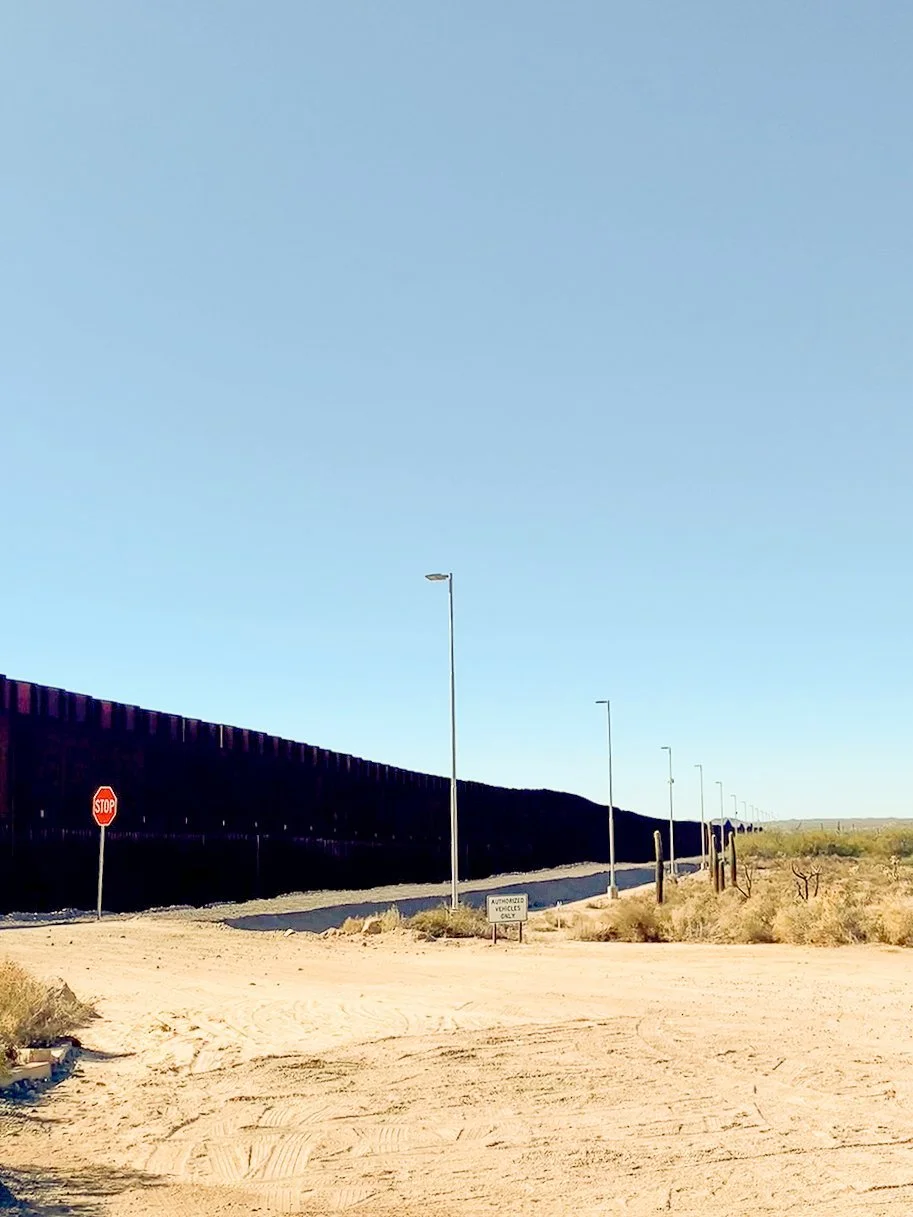
The 30-foot wall built in 2020, photographed in 2022 — this is what a second wall is now going up alongside.
The Tohono O'odham Nation sued the federal government back in June. Members have posted no-trespassing signs and personally escorted contractors off tribal land. A federal court denied their request to halt construction in August; they've appealed. Their chairman, Verlon Jose, put it about as plainly as it can be put: “I would not put a wall in the middle of your home. I would not blow up your family cemetery.” That's not a metaphor for him. There's a cemetery there.
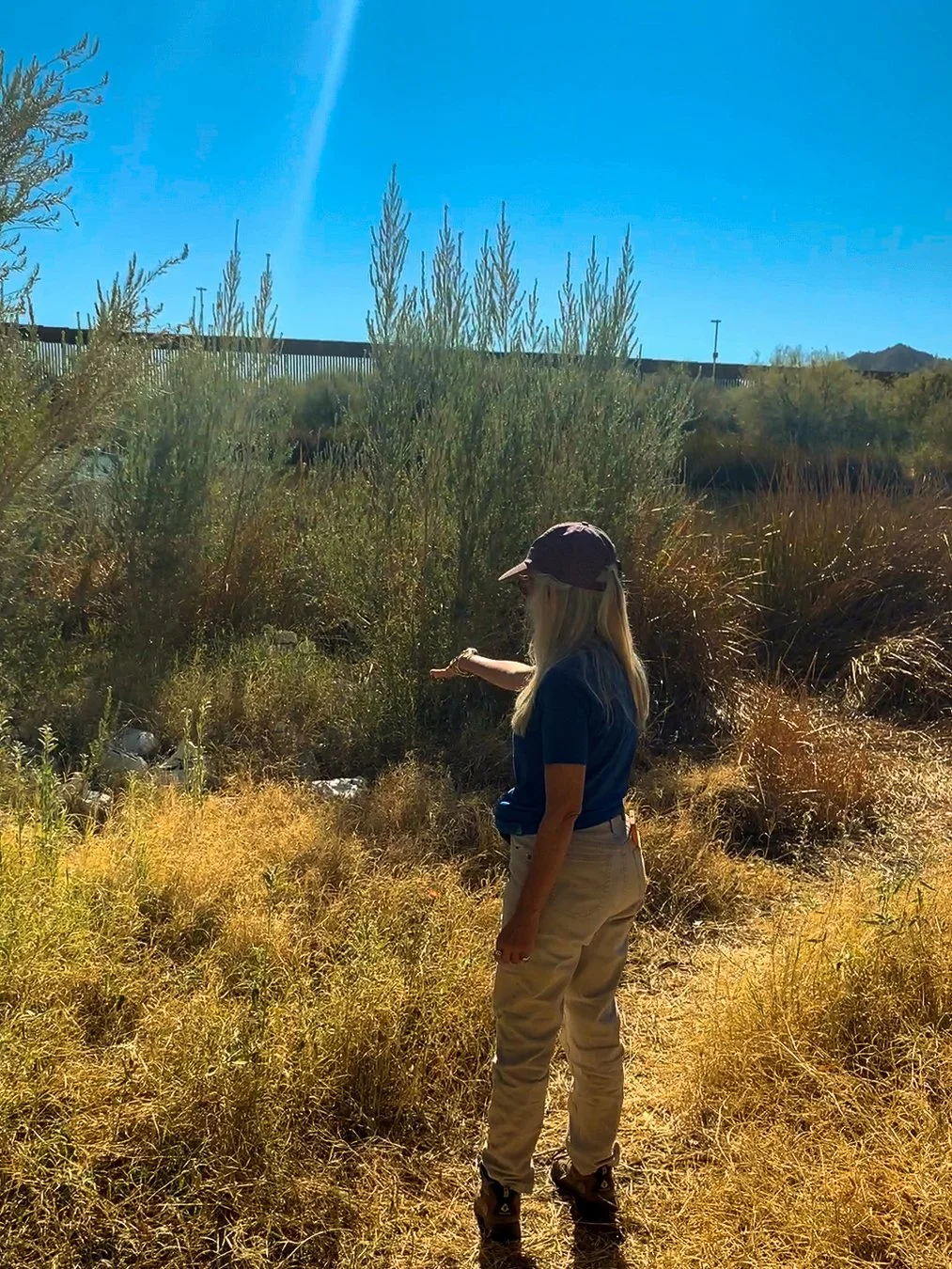
A visitor looks toward the wall and the trash left behind from the springs, 2022.
I started this project because a nine-second flatline taught me something about what deserves attention and what doesn't. A spring that's been giving water to human beings since before agriculture, patched back together once already at a fraction of the cost of the thing that broke it, now sitting in the path of a second round of the same construction — that qualifies. So does a species that exists nowhere else on the planet. So does a promise, made to a nation of people, currently being tested by a bulldozer.
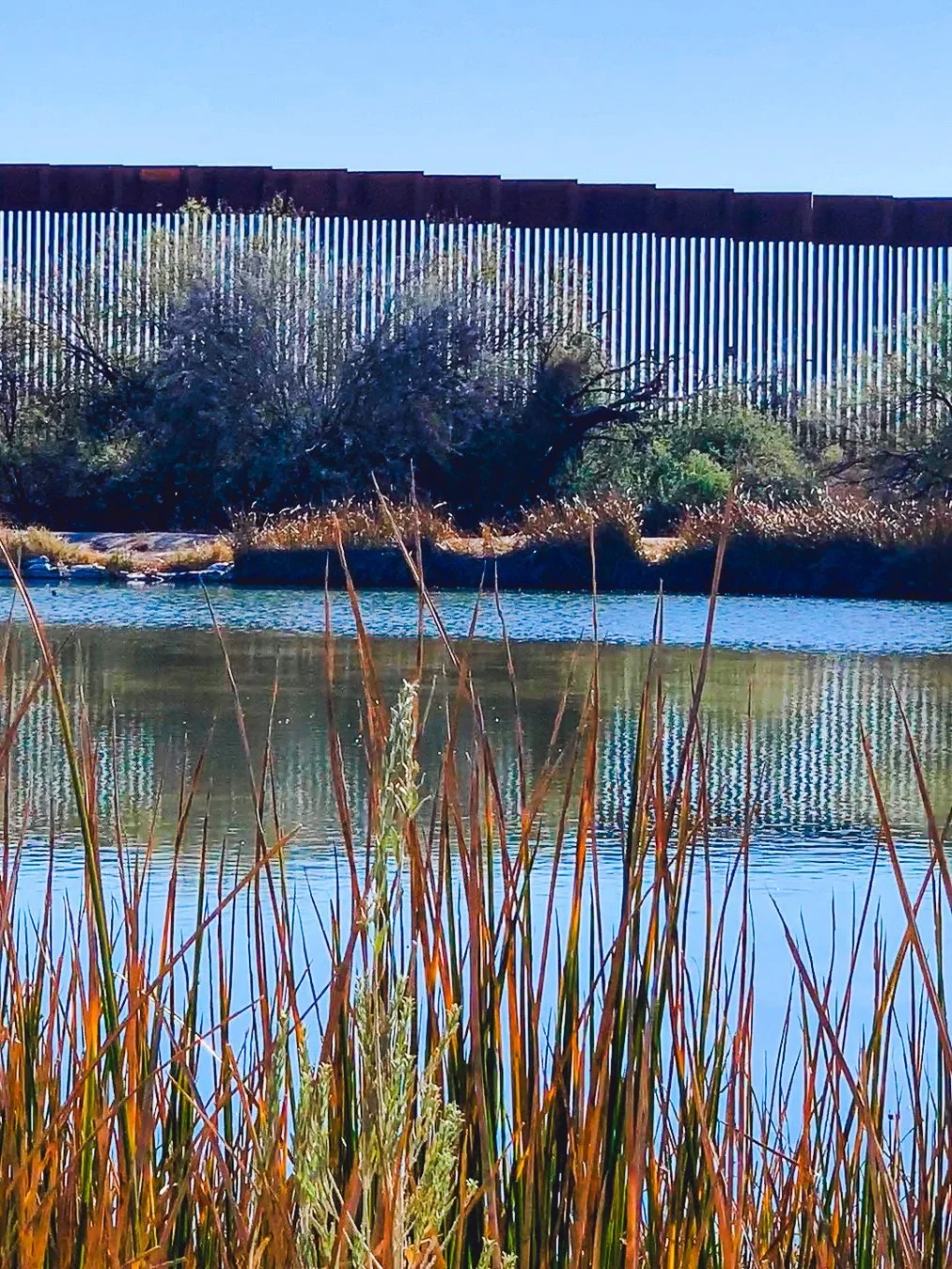
Quitobaquito Springs, 2022 — the pond and the wall in the same frame.
I don't know if writing about it changes anything at ground level in Arizona. I know that not writing about it changes nothing either, and at least this way it doesn't happen in silence. Some things are worth more than the fifteen seconds a feed gives them. This is one.