The Technically Sweet Problem, Take Two
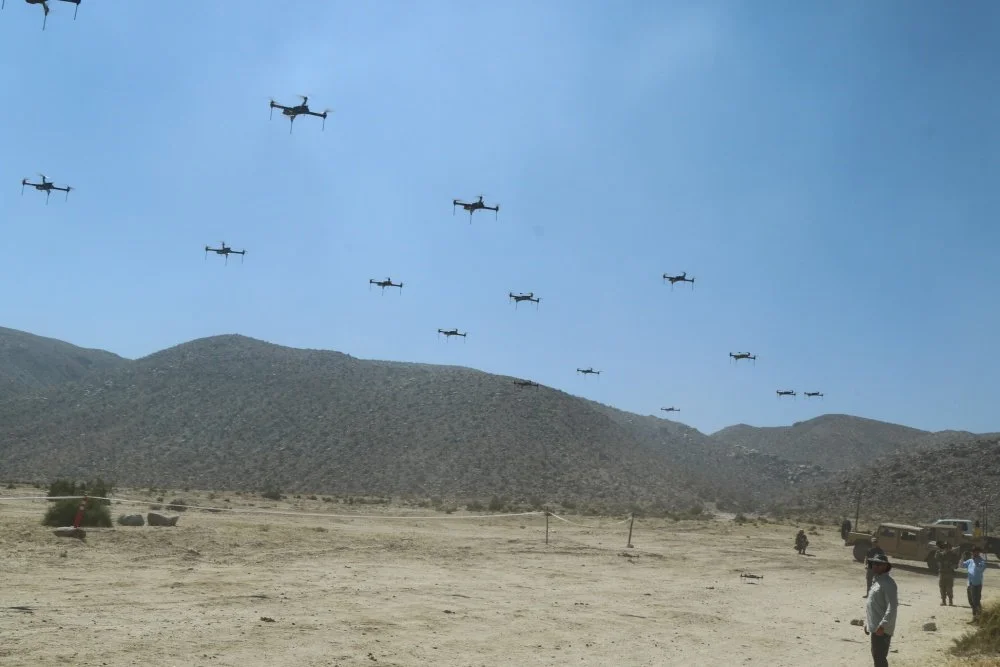
Military drone swarm
The observation begins with drones: drones recreating the Twin Towers in the sky over New York, drones causing devastation across the Middle East, and a rising fear that AI could bring about the end of humanity within the next ten years. Taken together, these threads point to something larger than any single headline — a pattern that has repeated at every major inflection point in technology since the Industrial Revolution. Each leap has reshaped not just how people work, but how they find value in their lives, and in some cases, how they die.
The development of the nuclear bomb at Oak Ridge and elsewhere stands as the sharpest prior example — part of the Manhattan Project, formally the Manhattan Engineer District, the U.S. Army Corps of Engineers program that extended well beyond the bomb's design itself. It encompassed the industrial-scale enrichment of uranium at Oak Ridge, plutonium production at Hanford, and weapon design and assembly at Los Alamos — a sprawling national effort to move a weapon from theory to deployable reality.
Oppenheimer's notion of a "technically sweet" problem is central here. Testifying at his 1954 security clearance hearing, he was speaking specifically about the decision to pursue the hydrogen bomb after the Soviet Union's first atomic test — not the original bomb itself — but he drew the line straight back to that earlier case as the model. He described the 1949 hydrogen bomb program as a "tortured thing" that didn't make much technical sense, one that could reasonably be argued against. By 1951, once the practicalities became clear, the program had become, in his words, "technically so sweet that you could not argue about it." His broader point: "When you see something that is technically sweet, you go ahead and do it and you argue about what to do about it only after you have had your technical success. That is the way it was with the atomic bomb." The pull he's describing isn't abstract fear of a technology — it's the seduction that hits once you can see exactly how to build the thing.
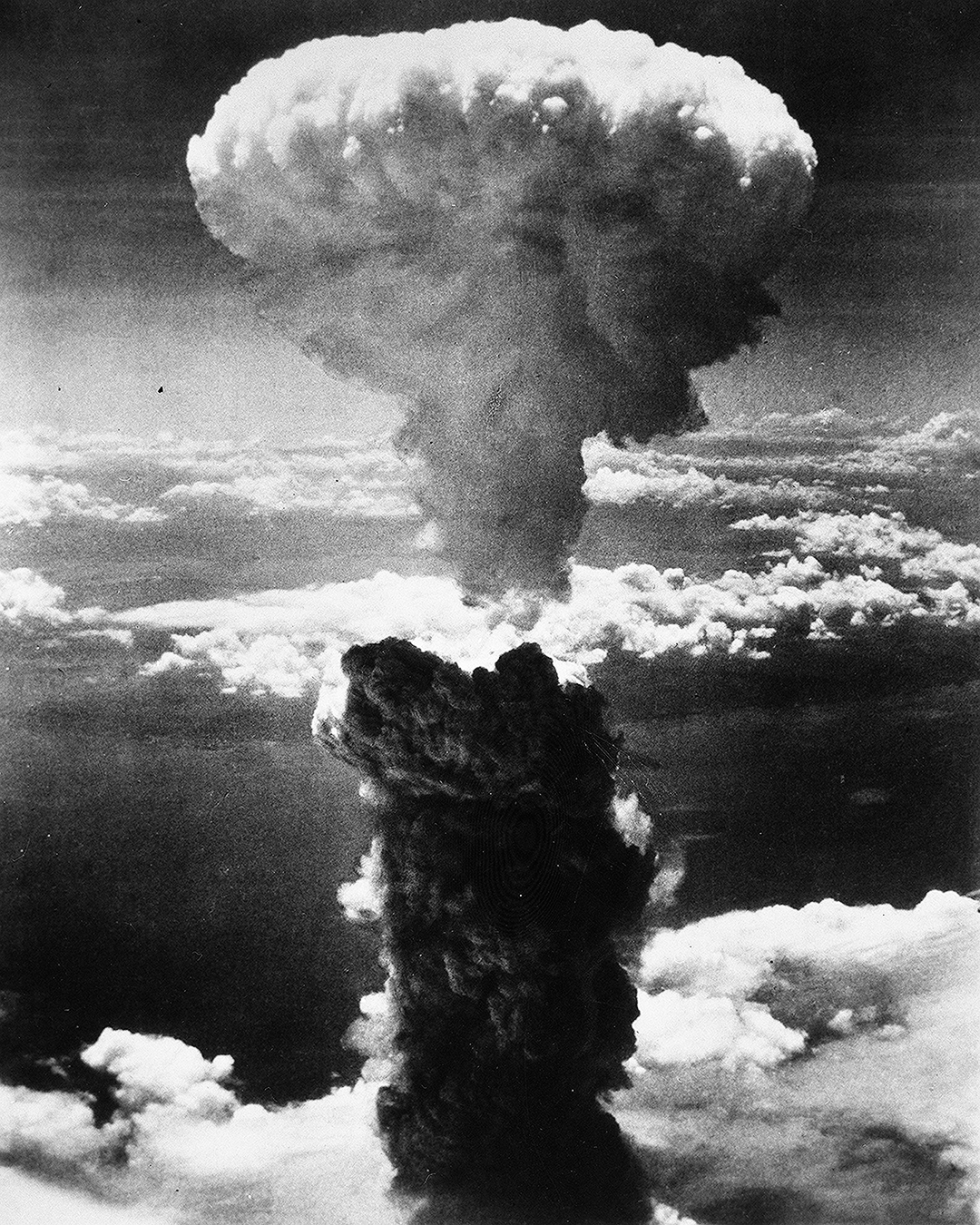
Nuclear explosion mushroom cloud over Nagasaki, Japan
Humanity has stood at the edge of its own annihilation before. That edge is arguably still in front of us, and it may be part of the logic behind the current U.S. posture toward Iran — one interpretation being that the same technically sweet pull that drove the nuclear age is operating again, this time around AI and drone warfare.
The premise is that this is a cusp moment: AI is ushering in a new era in the way the nuclear age once did, and it likely needs to be approached with the same seriousness — the same reckoning with consequence — that eventually shaped how the world handled nuclear weapons. AI and drones are already changing the nature of war. Ukraine's resistance to Putin's invasion is one clear illustration — its endurance to this point has gone beyond what most predictions expected, and much of that owes to exactly the kind of technology this piece is concerned with.
The open question sitting underneath all of it: did we just get lucky? Did the world actually manage the nuclear age well, through deliberate norms and deterrence — or did it simply avoid catastrophe for eighty years through luck that may not hold? And if it was luck, the choice in front of us now is the one that matters: do we roll the dice again, or do we act to manage the problem before it becomes one?
Reading list
Day One, Before Hiroshima and After — Peter Wyden
The Making of the Atomic Bomb — Richard Rhodes
Brighter Than a Thousand Suns — Robert Jungk
Genius Makers — Cade Metz
The Coming Wave — Mustafa Suleyman
The Age of AI — Kissinger, Schmidt & Huttenlocher
What's Left of the Water
There's a spring in the Arizona desert that has been giving people water for at least sixteen thousand years. Not sixteen hundred. Sixteen thousand. Archaeologists have found evidence of people camped at Quitobaquito Springs going back that far — long before Rome, long before writing, long before almost anything we'd recognize as history. The Hia-Ced O'odham and Tohono O'odham have called it A'al Vaipia and treated it as sacred ground for as long as anyone can trace. A Jesuit missionary wrote about visiting it in 1698 and gave it a name that didn't stick. A family — the Oroscos — lived there, the last private residents, until 1957, when the park service finally bought the land and folded it into Organ Pipe Cactus National Monument.
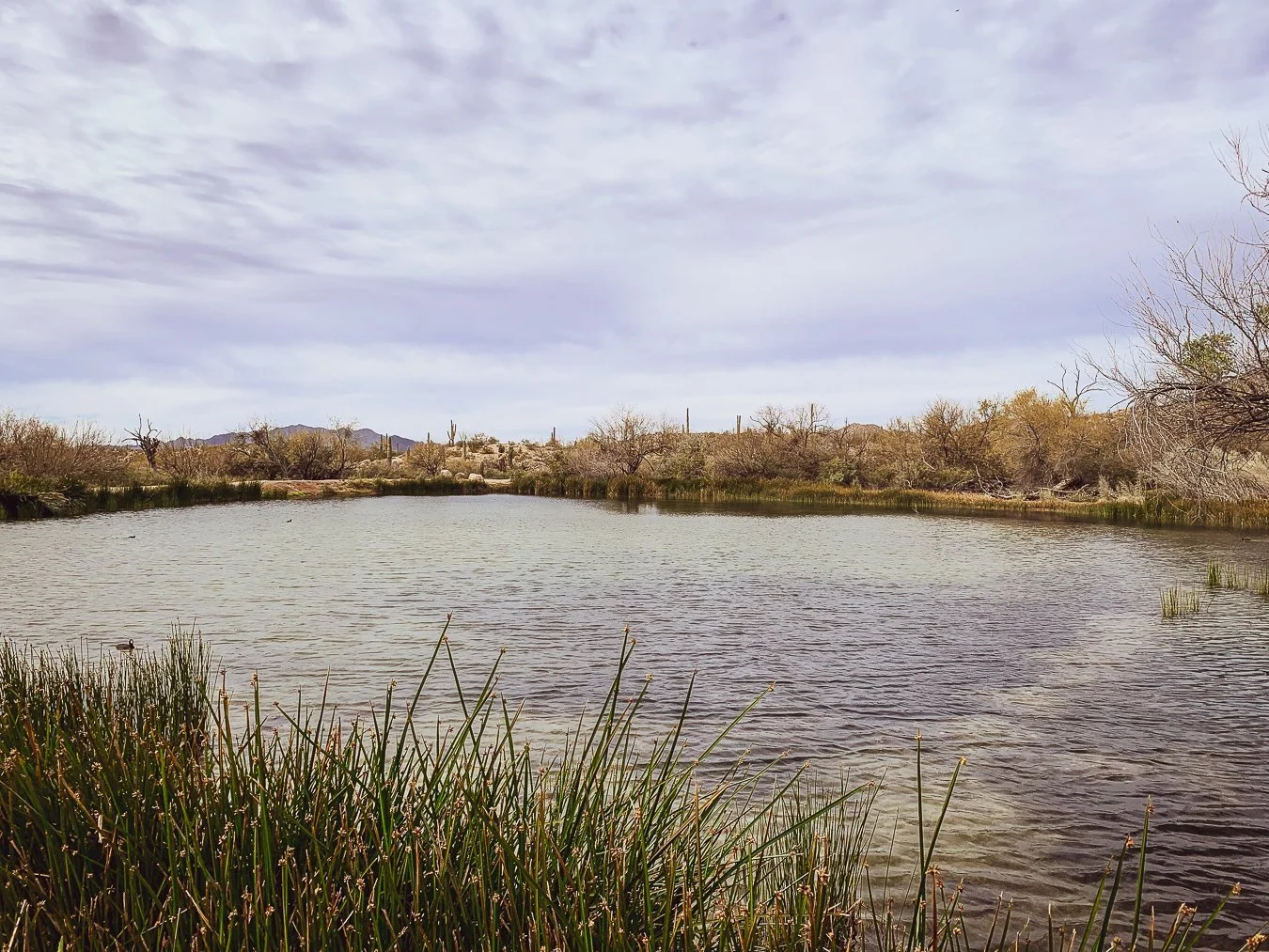
Quitobaquito Springs, 2019 — before the first wall
None of that is what I want to write about today, exactly. What I want to write about is what's happening to it right now, this week, while most of the country isn't looking.
Quitobaquito is one of the only reliable above-ground water sources in that whole stretch of desert. It holds a fish that lives nowhere else on Earth — the Quitobaquito pupfish, already endangered. It holds a mud turtle being considered for endangered status, a spring snail smaller than a grain of pepper, a desert caper plant with its own dedicated butterfly. Take the water away and none of that comes back. It isn't the kind of thing you rebuild.
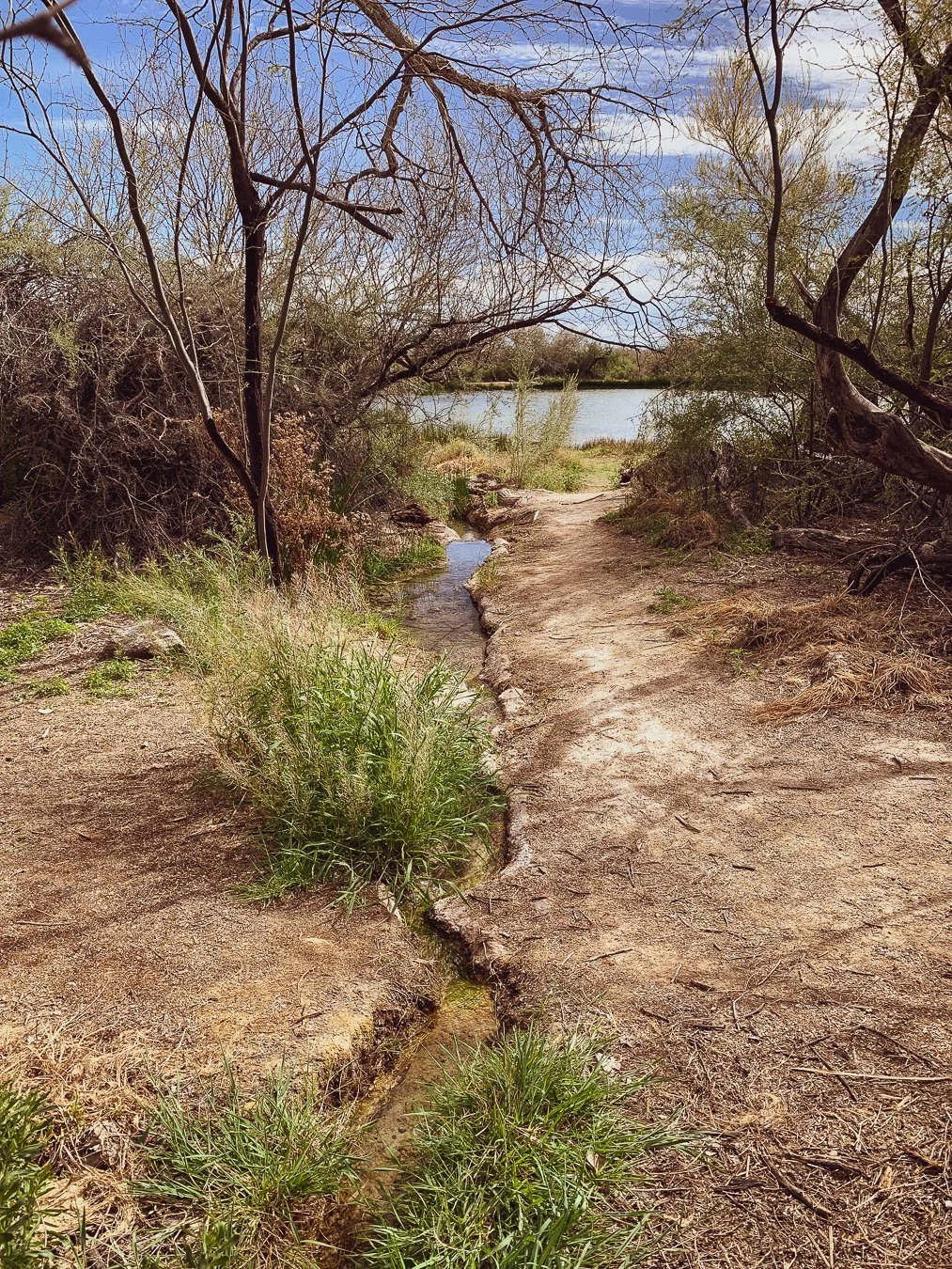
The spring's outflow, 2019 — the water the pupfish, the turtle, and the springsnail all depend on.
In 2020, during the first round of border wall construction, crews put up a 30-foot bollard fence south of the springs. Water levels dropped. Scientists said so publicly and asked for construction to stop. It didn't stop, though that round eventually ended.
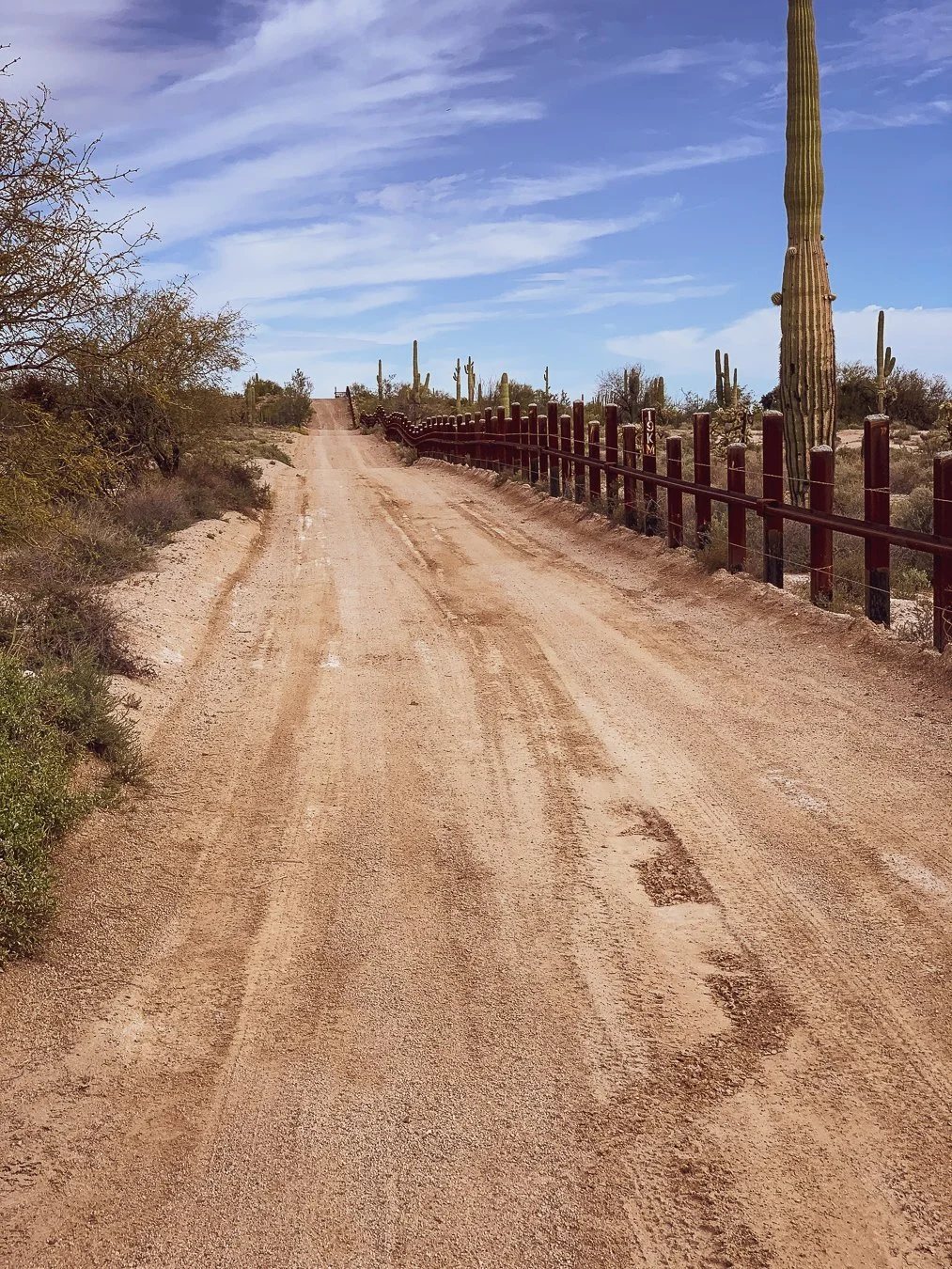
What stood here before 2020 — a low vehicle barrier built to stop trucks while still letting water and wildlife pass through.
Fixing what that broke took more than a press release. A small nonprofit up the road in Ajo — the International Sonoran Desert Alliance — spent a year raising money for the repair, reaching $100,000 by June 2021. The job itself was replacing the pond's liner, something the Park Service hadn't done in fifty years, and it ran somewhere between $250,000 and $400,000 once federal funds were added in — a rounding error next to what the wall itself cost, spent just to undo what building the wall broke. When the actual work started in the spring of 2022 — right around when I was there myself — crews had to empty the pond completely. Every wild pupfish and every wild mud turtle on the planet, because there is no other population of either anywhere, got scooped by hand into holding tanks until the new liner was down and the water was let back in.
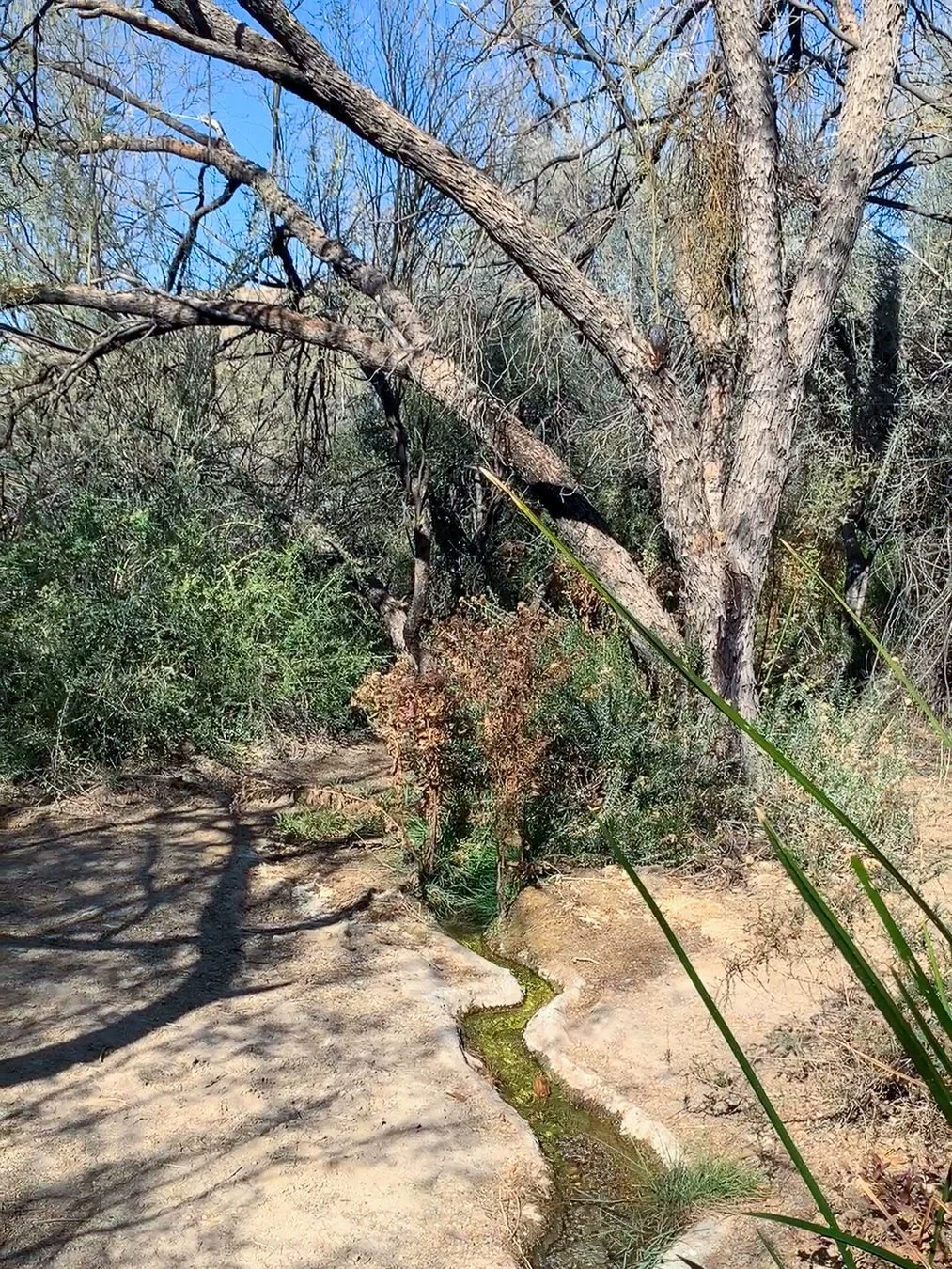
The same outflow channel, 2022, after the pond was relined and refilled.
Even the people who pulled that off don't call it a recovery. Lorraine Eiler, a Hia C-ed O'odham elder who helped lead the restoration, said afterward: “Whatever was here is gone... We'll never get to the point of what it used to look like.”
As of this month, bulldozers are back — on both sides of the springs this time, clearing ground for a second wall, with more construction planned on Tohono O'odham land just to the east. Crews have been out doing soil sampling and boring into the earth, which is the quiet, procedural-sounding phase that comes right before the loud one. Customs and Border Protection hasn't said when the loud one starts.
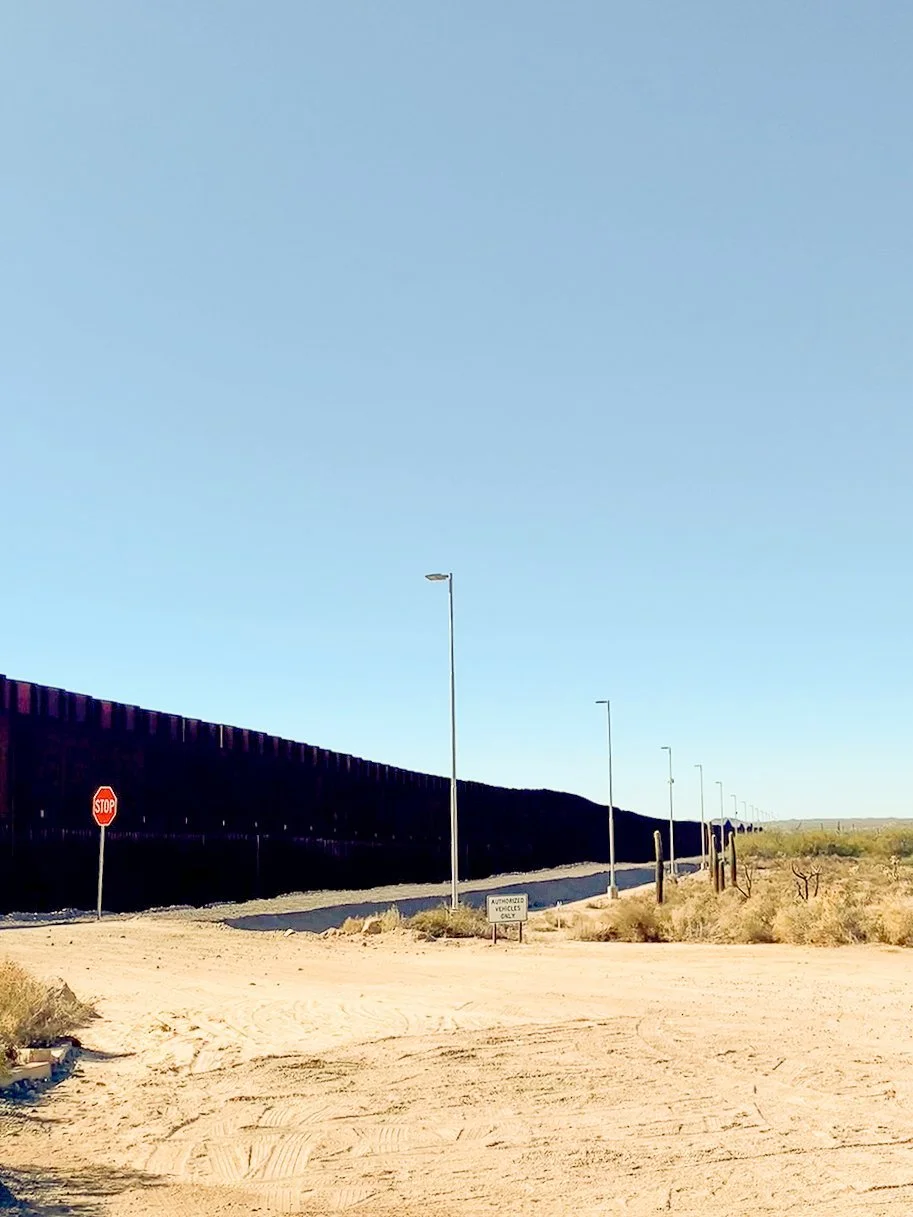
The 30-foot wall built in 2020, photographed in 2022 — this is what a second wall is now going up alongside.
The Tohono O'odham Nation sued the federal government back in June. Members have posted no-trespassing signs and personally escorted contractors off tribal land. A federal court denied their request to halt construction in August; they've appealed. Their chairman, Verlon Jose, put it about as plainly as it can be put: “I would not put a wall in the middle of your home. I would not blow up your family cemetery.” That's not a metaphor for him. There's a cemetery there.
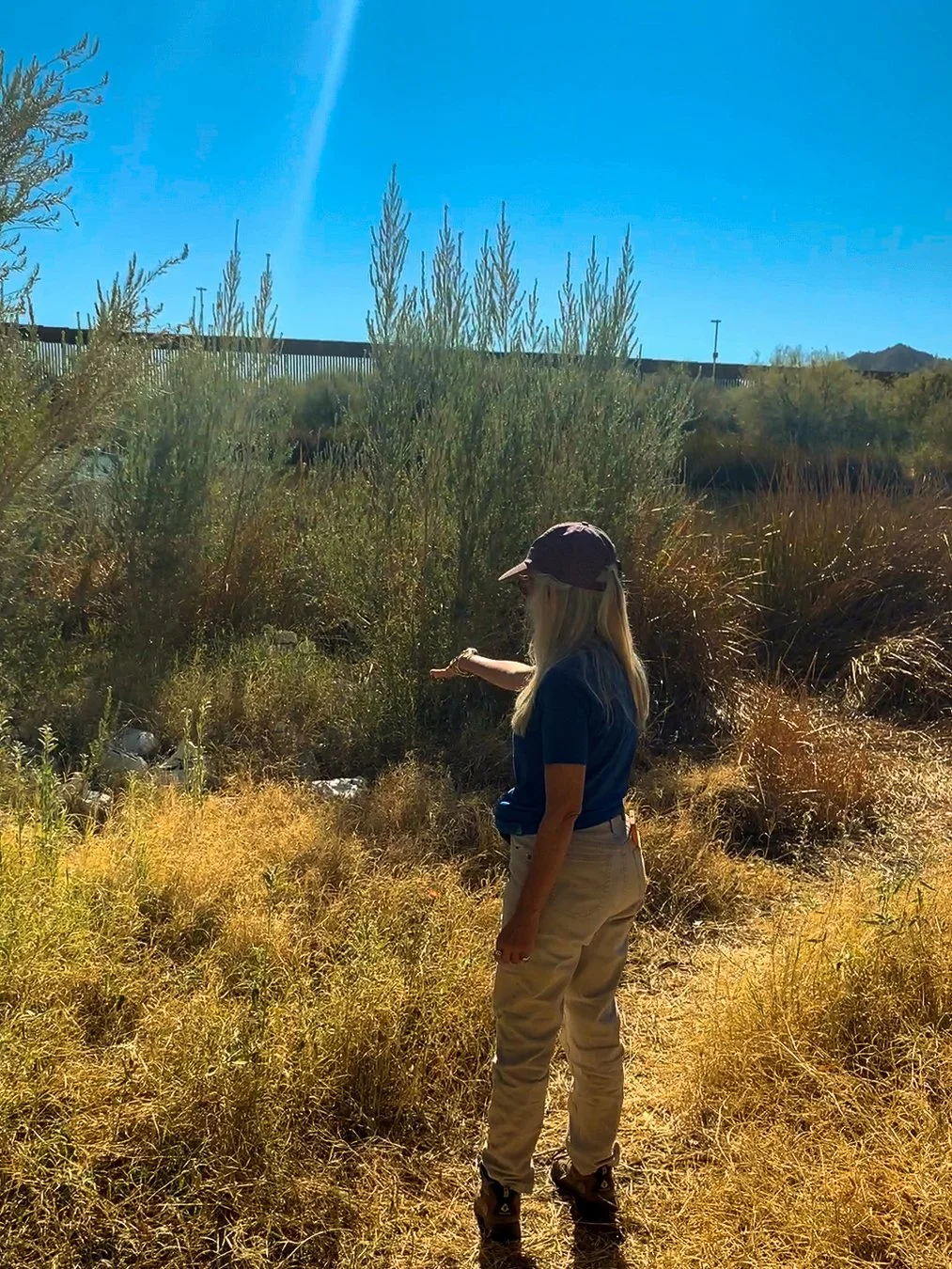
A visitor looks toward the wall and the trash left behind from the springs, 2022.
I started this project because a nine-second flatline taught me something about what deserves attention and what doesn't. A spring that's been giving water to human beings since before agriculture, patched back together once already at a fraction of the cost of the thing that broke it, now sitting in the path of a second round of the same construction — that qualifies. So does a species that exists nowhere else on the planet. So does a promise, made to a nation of people, currently being tested by a bulldozer.
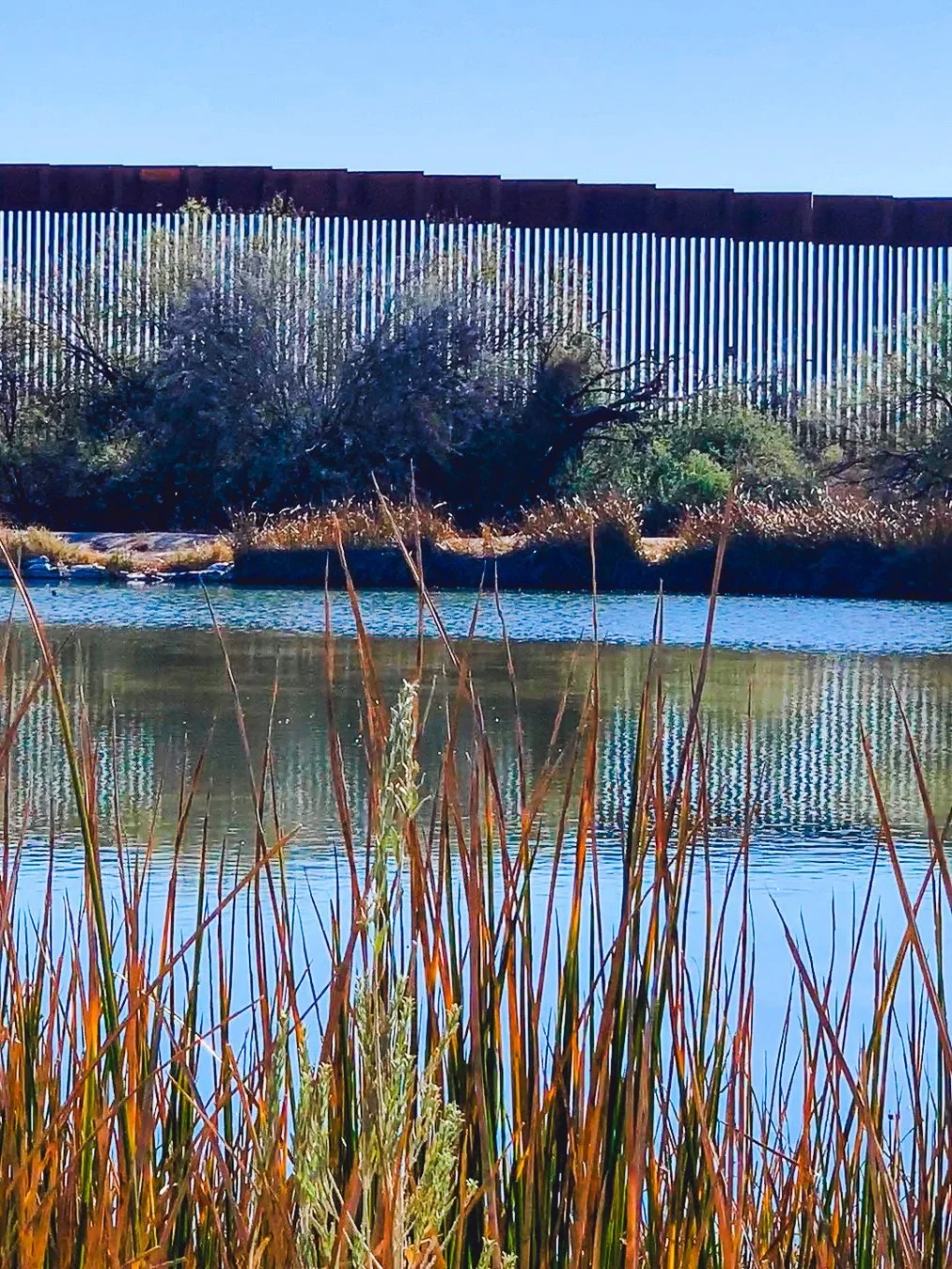
Quitobaquito Springs, 2022 — the pond and the wall in the same frame.
I don't know if writing about it changes anything at ground level in Arizona. I know that not writing about it changes nothing either, and at least this way it doesn't happen in silence. Some things are worth more than the fifteen seconds a feed gives them. This is one.
The Weakest Link
What an aircraft carrier taught me about the difference between power and resilience
What an aircraft carrier taught me about the difference between power and resilience
First essay in the National Resilience series
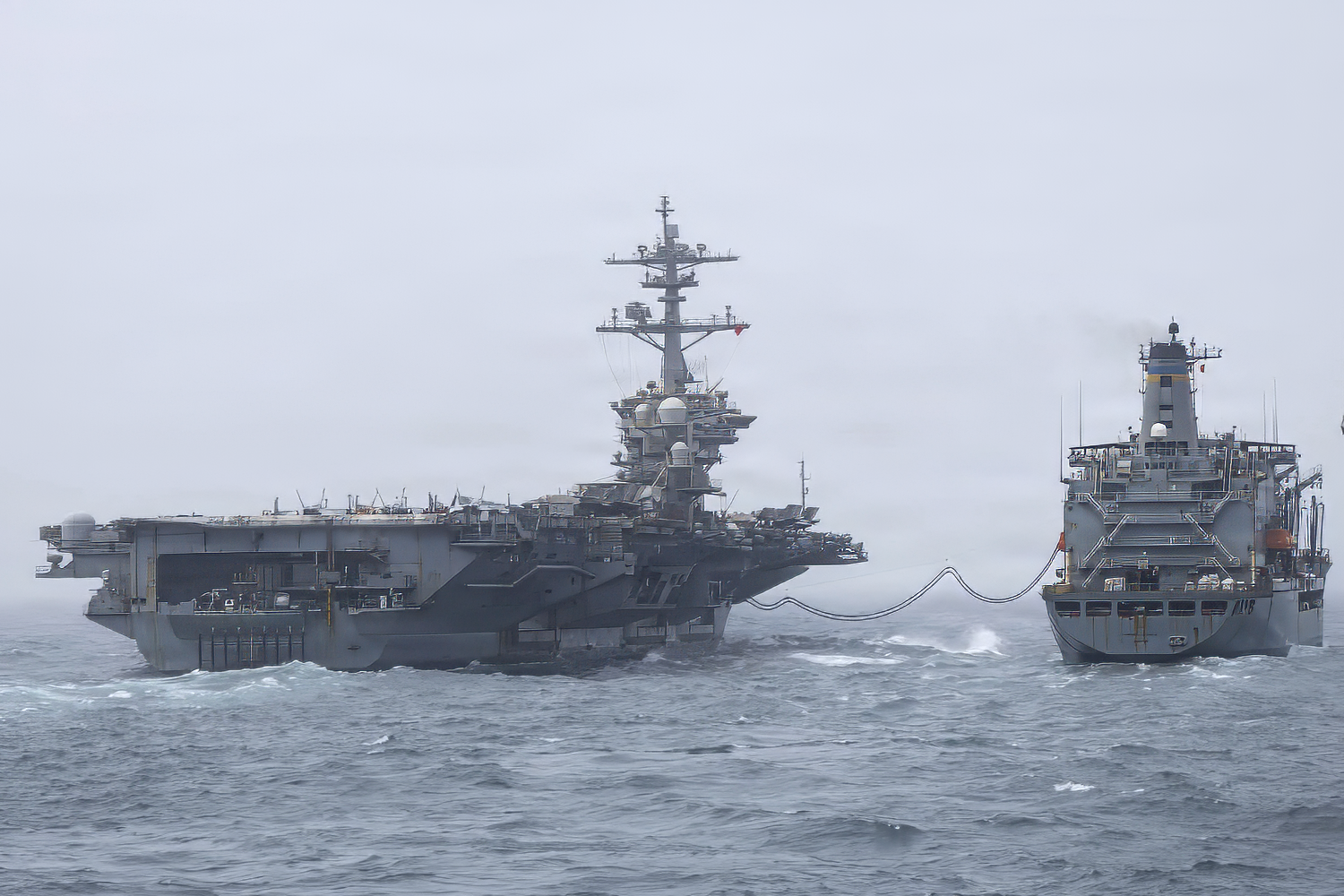
For more than 250 days, the USS Abraham Lincoln did not see a home port — a modern Navy record. Sailors rationed food. Water ran short. Mail piled up on the other side of the world with no way to reach the ship. None of it happened because the Lincoln lost a fight or took a hit. It just couldn't get home.
The reason traces back to a place most Americans have never heard of: a U.S. Navy logistics hub in Bahrain, headquarters of the Fifth Fleet, and the traditional supply point for this kind of operation. Iranian attacks damaged it badly enough that the Pentagon had to reroute resupply for the Lincoln to Diego Garcia, roughly 2,200 miles farther from where the carrier needed to be. An aircraft carrier doesn't usually need to enter port for fuel and ammunition; replenishment ships handle that at sea. But those replenishment ships need somewhere nearby to load and turn around. Push that somewhere far enough away, and the whole system stretches past its design limits.
What strikes me is that the carrier itself — the most expensive, most heavily defended piece of hardware in the strike group — never stopped working. The warship didn't break. What broke was the unglamorous stuff behind it: the port, the fuel depot, the supply chain nobody puts on a recruiting poster.
The consequences didn't stay in the Middle East, either. Relieving the Lincoln required pulling the USS George Washington — the Navy's only permanently forward-deployed carrier, normally stationed in Japan — out of the Pacific. That's one of the theaters the current administration's own National Defense Strategy names as a top military priority. As of this week, the Pacific still has no U.S. carrier presence; the best outside estimate puts its return sometime in late October or November.
The question was never really how many ports the U.S. has in the Middle East — a number a viral post got wrong to begin with. It's how many independent, survivable supply paths are left once an adversary starts probing for the obvious ones. Oddly enough, that question sent me back decades, to a project I worked on long before anyone was talking about carrier gaps, and to a career spent watching what happens when experience walks out the door.
⸻
I'm not a military expert, and I'm not writing as one. I'm an engineer who spent a career asking a fairly narrow question — what happens to a system when the parts holding it up start to fail. That question doesn't stay inside the industries I actually worked in.
Years ago, I worked on a DARPA project studying how to link multiple semisubmersible platforms together, using hinge connections, to create a resilient offshore base for supplying military operations. The point was to solve the Lincoln's problem before anyone called it that: how do you keep an operation supplied when the fixed infrastructure you'd normally rely on is unavailable, too vulnerable, or too far away? The technology has moved on since then. The underlying constraint hasn't.
The back half of my career took me somewhere less exotic — into the oil field, and eventually into marine surveying, watching over projects to add a layer of experience the younger engineers on them hadn't earned yet. I used to joke I was making money off my gray hair. Clients weren't paying for someone who could still run the calculations — plenty of people could do that. They were paying for judgment built from watching a lot of projects succeed, fail, or nearly fail. The kind of thing that makes you say I've seen this before, we need to look at it, well before any procedure manual tells you to.
This isn't about older workers being better than younger ones — a resilient organization needs both; young engineers bring analytical tools and a fresh eye that experience alone doesn't. The failure happens when one generation walks out the door before its knowledge actually transfers to the next. Investigators looking into Deepwater Horizon didn't find that replacing experienced engineers with cheaper ones caused the blowout — that's a stronger claim than the evidence supports. What they found, repeatedly, was a failure of organizational learning: near-miss lessons that never got written down anywhere that mattered, safety findings from one facility that never reached the next. The procedures survived. The memory of why they existed didn't.
⸻
That's really the whole argument: power and resilience aren't the same thing. A country's strength runs through an interconnected system — military logistics, industrial capacity, institutional knowledge, alliances, economic depth — and those pieces prop each other up when there's margin in the system, and drag each other down when there isn't. Redundant supply routes, spare manufacturing capacity, experienced people who cost more than their replacements — all of it looks like waste until the day it doesn't.
Take munitions, where the honest story cuts both ways. Tomahawk deliveries are reportedly up threefold over the past year — real output, not a contract sitting on paper, and it deserves to be said plainly. At the same time, manufacturing lead times for the weapons that would matter most in a prolonged conflict still run 25 to 51 months, about where they started. Both things are true at once, which is what a system under partial repair looks like: better, but not yet enough.
Or take Canada — a country whose military infrastructure is bound to ours through NORAD, whose defense industry is deeply woven into America's. As I write this, the relationship has taken a real turn for the worse: a trade dispute has escalated into tariffs and retaliation, and Canada's own prime minister has started talking about it in the language of an attack. Whatever you think of the trade fight on its own terms, it's a clean example of a decision made in one system — trade policy — landing as a cost in a completely different one: continental defense.
This piece leaves some things out on purpose. Along the way, the research kept opening onto questions about wealth concentration and how cultural conflict gets used to scramble ordinary political coalitions — real questions, with real evidence behind them, but not ones this piece can take on without turning into an argument about everything wrong with America at once. They'll get their own essay, if this one holds up.
⸻
Which raises the real question: can the United States still absorb several shocks at once — military, economic, political — without solving today's problem by using up the redundancy it'll need for tomorrow's? Credit where it's due: the administration has already asked itself this question. The 2026 National Defense Strategy names what it calls the "simultaneity problem" — the risk of adversaries acting opportunistically across several theaters at once — and proposes leaning harder on allies as the answer. This isn't leadership failing to notice a problem everyone else could see.
What's harder to explain away is what's happened to institutional memory across government over the same stretch. The Army has gone without a confirmed Chief of Staff for months. The number of four-star billets has dropped from ten to five, the lowest in decades. And it isn't confined to the Pentagon: government auditors have separately documented FEMA losing roughly 4,300 staff in a single year — a 55 percent jump — to the point that the agency itself says it can no longer determine its own future staffing needs. The Office of Personnel Management lost more than a third of its workforce in fifteen months, and more than half of those who left had eleven years of experience or more. None of that comes from opinion writers. It comes from the government's own auditors, whose entire job is to document exactly this kind of thing.
My own read is that current leadership isn't showing the systems-level thinking this moment calls for. That's a judgment, not a fact, and I'll hold to the same rule the rest of this piece has tried to follow: the strongest evidence on the other side deserves to be said out loud, not quietly dropped. Every NATO member is now hitting the alliance's defense-spending target for the first time in its history. Munitions output is genuinely climbing. A country actually losing the capacity to respond wouldn't be doing either of those things.
I don't have a solution to offer, so I'll close with the question instead: do we still have the institutional capacity — and the leadership — to see the whole system clearly enough that solving today's crisis doesn't just create tomorrow's?